Engineering

How we are sending notifications easy with Novu

How we are sending notifications easy with Novu

Midday is all about being on top of your business. Stay informed about your business insights, track when you get paid, receive updates on new transactions, and access general information how your business actually are doing. And that includes well-timed notifications via emails and push notifications, carefully curated for your convenience.


The challenge: Implementing a unified infrastructure for notifications

From the beginning, we knew the importance of a unified approach to managing our notifications. From past experiences of stitching together different solutions to support various notification needs, we were determined to create a system that could seamlessly support web, desktop, and mobile applications. Our goal is to ensure that our notification system can scale alongside our growth.


The solution: Novu

While we tried a bunch of different providers we decided to go with Novu based on our requirements:

  • Support Resend, Expo
  • In App notifications
  • User Preferences

Novu not only ticked every box they also got a huge bonus for being open source and you get 30K events/month for free.


Implementation and SDKs

We started with created our own package @midday/notifications where we installed @novu/node dependency, where we register our notification types for convenience:

// Our notification templates
export enum Templates {
  Transaction = "transaction",
  Transactions = "transactions",
  Inbox = "inbox",
  Match = "match",
}

// Our notification types (email|in-app)
export enum Events {
  TransactionNewInApp = "transaction_new_in_app",
  TransactionsNewInApp = "transactions_new_in_app",
  TransactionNewEmail = "transaction_new_email",
  InboxNewInApp = "inbox_new_in_app",
  MatchNewInApp = "match_in_app",
}

And using our New Transactions email as an example, which is sent from a background job using Trigger.dev when you have new transactions.

import { Notifications, Types, Events } from "@midday/notifications";

// Generate html from react-email
const html = await renderAsync(
  TransactionsEmail({
    fullName: user.full_name,
    transactions,
    locale: user.locale,
  })
);

await Notifications.trigger({
  name: Events.TransactionNewEmail,
  payload: {
    type: Types.Transaction,
    subject: t("transactions.subject"),
    html,
  },
  user: {
    subscriberId: user.id,
    teamId: team_id,
    email: user.email,
    fullName: user.full_name,
    avatarUrl: user.avatar_url,
  },
});

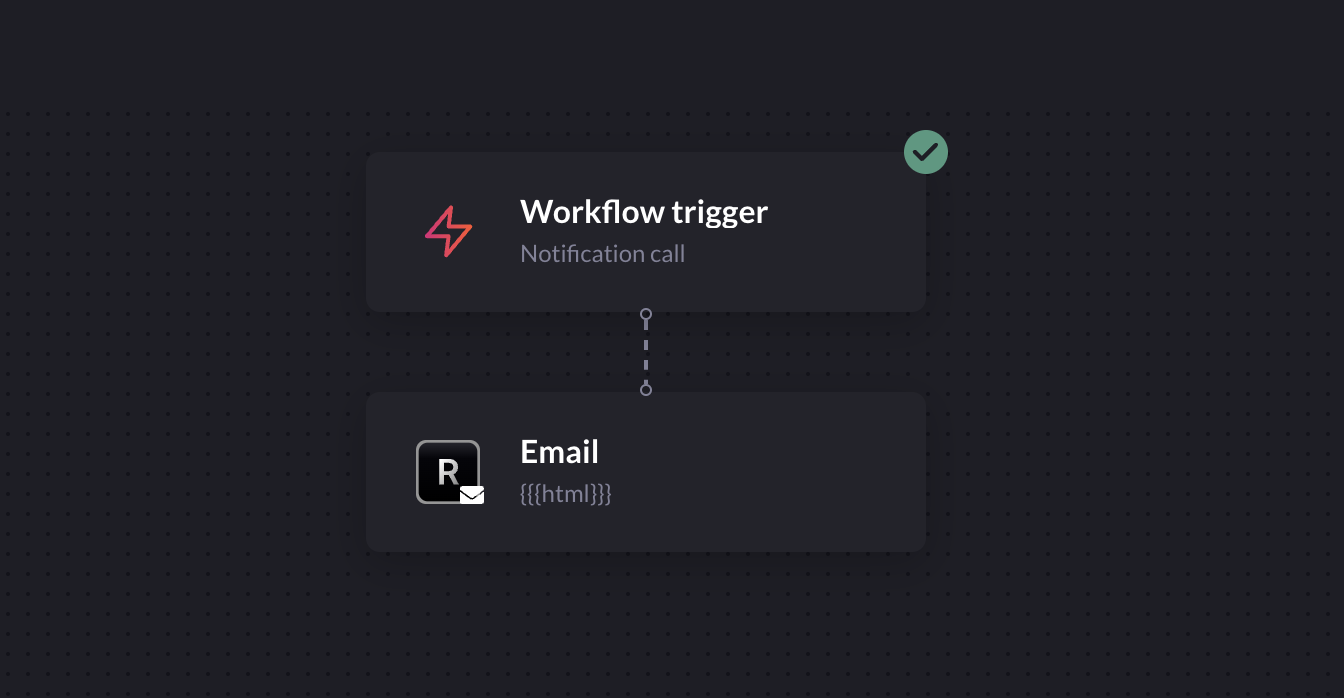
Because we are sending the email with the variables subject and html with the generated content we are just adding those to Novu and then we're done.


Novu - Variables


And to send In App Notifications it's just a matter of changing the Events and Types.

import { Notifications, Types, Events } from "@midday/notifications";

await Notifications.trigger({
  name: Events.TransactionNewInApp,
  payload: {
    recordId: transaction.id,
    type: Types.Transaction,
    description: t("notifications.transaction", {
      from: transaction.name,
    }),
  },
  user: {
    subscriberId: user.id,
    teamId: team_id,
    email: user.email,
    fullName: user.full_name,
    avatarUrl: user.avatar_url,
  },
});

The results: Beautiful In App Notifications and Emails


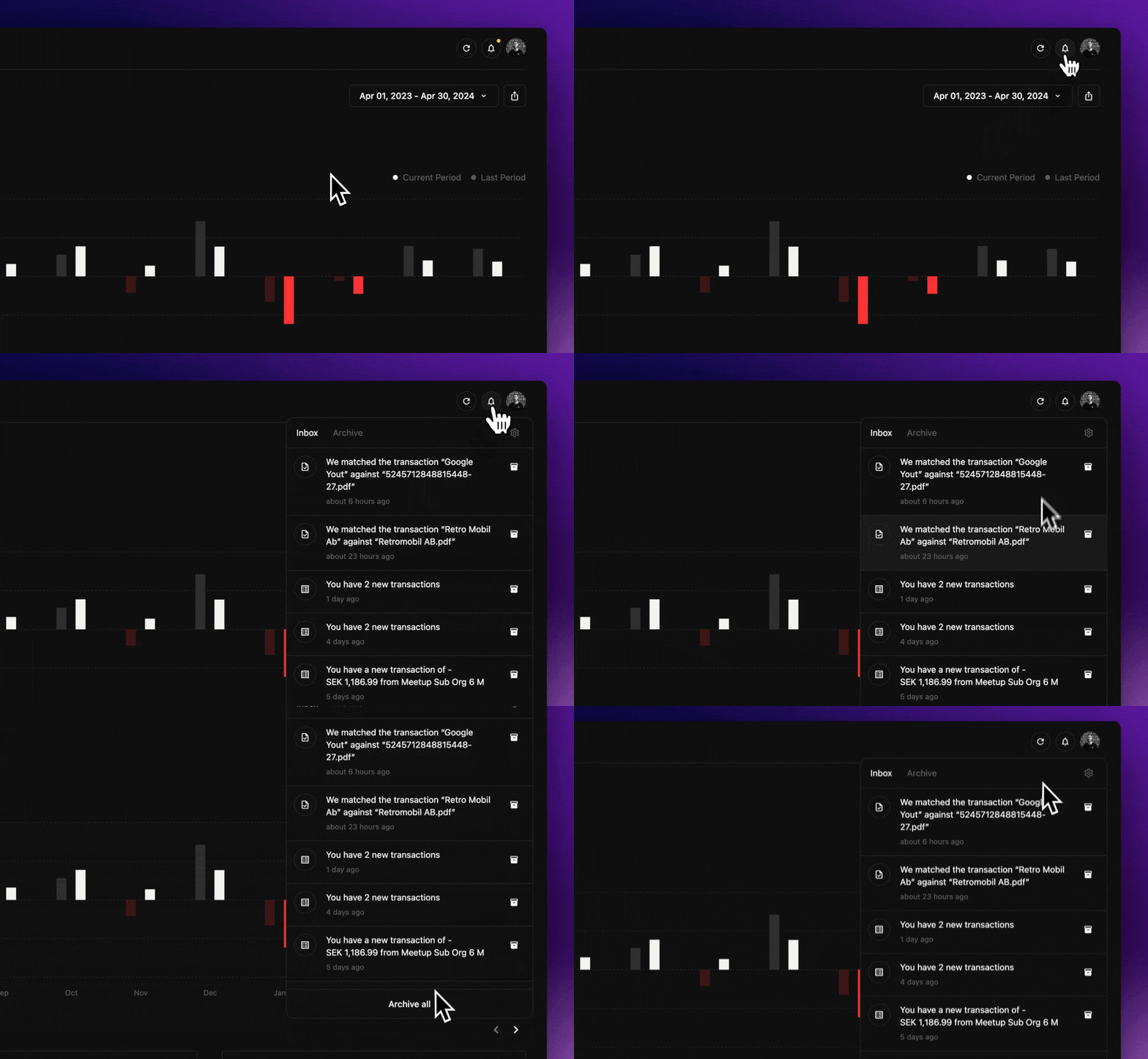
Midday - In App Notifications


Thanks to the SDK @novu/headless we implemented the notification center for Midday in a matter of hours to match our branding exacly like we wanted while Novu delivers the notifications in realtime.


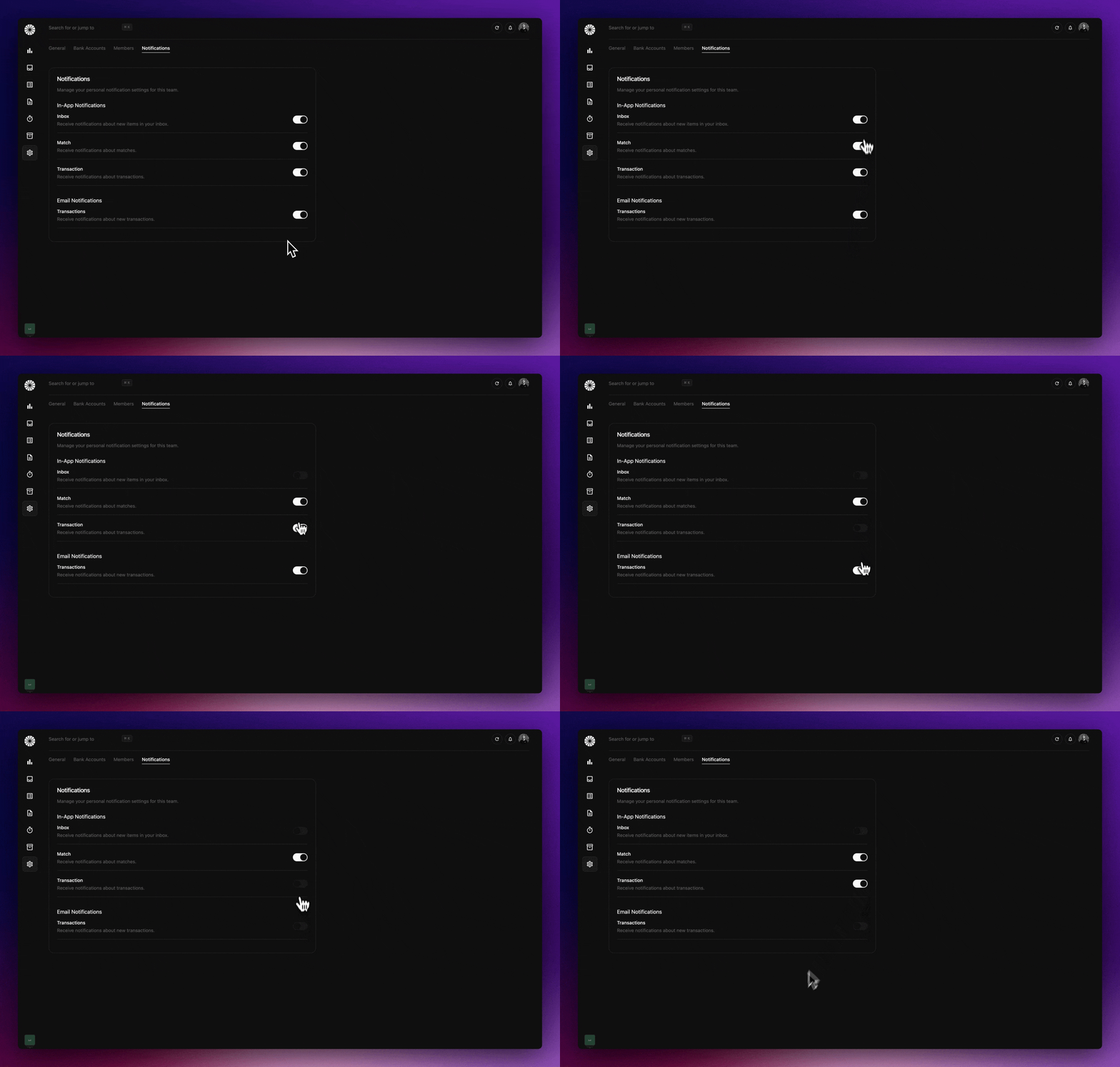
And for user preferences we just use their API together with a simple server action.


Midday - In App Notifications


The future of Midday x Novu

We are really happy that we chose to use Novu, We have several smart notifications planned that will offer valuable business insights. Plus, Novu will integrate smoothly with our upcoming mobile app, allowing us to send push notifications effortlessly via Expo by just connecting a new provider.


GitHub

While this is just a draft on how we are using Novu in production you can dig deeper into the codebase in our repository.

Engineering

How we take data-driven decisions with LogSnag

How we take data-driven decisions with LogSnag

It's important for every new product to take the right decisions as often you can, and thanks for our public roadmap, votes on feature request and building in public we have a deep connection with our users, but on top of that we also want data to back our decisions. And thats why we have implemented LogSnag to track a lot of events so we can take data-driven decisions too.


There are planty of ways how you can implement analytics, in this blog post we will share how we solved it in Midday using NextJS and server-actions.


Because we have a monorepo we started with creating a new package called @midday/events where we install @logsnag/next.


The package includes all the events we want to track in Midday for example:

{
    SignIn: {
        name: "User Signed In",
        icon: "🌝",
        channel: "login",
    },
        SignOut: {
        name: "User Signed Out",
        icon: "🌝",
        channel: "login",
    },
}

And based of these realtime events we can make clear graphs like Line Chart, Bar Chart and Funnel Charts.


LogSnag - Events


How we implemented LogSnag

When you sign in to Midday we first ask you about tracking, we want you to keep your privacy. This is done by showing a Toast component with the option to Accept or Decline, we save this decision in a cookie so we now if we should add a identifier for the events or not.


LogSnag - Events


We run a server action called tracking-consent-action.ts:

"use server";

import { Cookies } from "@/utils/constants";
import { addYears } from "date-fns";
import { cookies } from "next/headers";
import { action } from "./safe-action";
import { trackingConsentSchema } from "./schema";

export const trackingConsentAction = action(
  trackingConsentSchema,
  async (value) => {
    cookies().set({
      name: Cookies.TrackingConsent,
      value: value ? "1" : "0",
      expires: addYears(new Date(), 1),
    });

    return value;
  }
);

We then wrap the track method from LogSnag to enable or disabled the user_id to the event.

export const setupLogSnag = async (options?: Props) => {
  const { userId, fullName } = options ?? {};
  const consent = cookies().get(Cookies.TrackingConsent)?.value === "0";

  const logsnag = new LogSnag({
    token: process.env.LOGSNAG_PRIVATE_TOKEN!,
    project: process.env.NEXT_PUBLIC_LOGSNAG_PROJECT!,
    disableTracking: Boolean(process.env.NEXT_PUBLIC_LOGSNAG_DISABLED!),
  });

  if (consent && userId && fullName) {
    await logsnag.identify({
      user_id: userId,
      properties: {
        name: fullName,
      },
    });
  }

  return {
    ...logsnag,
    track: (options: TrackOptions) =>
      logsnag.track({
        ...options,
        user_id: consent ? userId : undefined,
      }),
  };
};

We use the setupLogSnag function like this:

export const exportTransactionsAction = action(
  exportTransactionsSchema,
  async (transactionIds) => {
    const user = await getUser();

    const event = await client.sendEvent({
      name: Events.TRANSACTIONS_EXPORT,
      payload: {
        transactionIds,
        teamId: user.data.team_id,
        locale: user.data.locale,
      },
    });

    const logsnag = await setupLogSnag({
      userId: user.data.id,
      fullName: user.data.full_name,
    });

    logsnag.track({
      event: LogEvents.ExportTransactions.name,
      icon: LogEvents.ExportTransactions.icon,
      channel: LogEvents.ExportTransactions.channel,
    });

    return event;
  }
);

We have a lot of events and charts pushing us to take right decisions, you can find the source code for this in our repository here.

Engineering

How we implemented link-sharing using Dub.co

How we implemented link-sharing using Dub.co

Earlier this week Dub.co shared our customer story on why we choose Dub as our link-sharing infrastructure.


In this blog post where gonna share a little more in details how we implemented this functionality.


We have some features like Time Tracker, Reports and files from Vault that our users shares outside their company and with that we have an authorization layer on our side using Supabase, but these links are often really long because they include a unique token.


Our solution was to implement Dub to generate unique short URLs.


How we implemented sharing for our reports


Midday - Overview


If you look closely you can se our link looks like this: https://go.midday.ai/5eYKrmV


When the user clicks Share we execute a server action using the library next-safe-action

that looks like this:

const createReport = useAction(createReportAction, {
  onError: () => {
    toast({
      duration: 2500,
      variant: "error",
      title: "Something went wrong pleaase try again.",
    });
  },
  onSuccess: (data) => {
    setOpen(false);

    const { id } = toast({
      title: "Report published",
      description: "Your report is ready to share.",
      variant: "success",
      footer: (
        <div className="mt-4 space-x-2 flex w-full">
          <CopyInput
            value={data.short_link}
            className="border-[#2C2C2C] w-full"
          />

          <Link href={data.short_link} onClick={() => dismiss(id)}>
            <Button>View</Button>
          </Link>
        </div>
      ),
    });
  },
});

The nice thing with next-safe-action is that you get callbacks on onError and onSuccess so in this case we show a toast based on the callback.


The action is pretty straightforward too, we first save the report based on the current parameters (from, to and type) depending on what kind of report we are creating.


We save it in Supabase and get a id back that we use to generate our sharable URL.

const dub = new Dub({ projectSlug: "midday" });

export const createReportAction = action(schema, async (params) => {
  const supabase = createClient();
  const user = await getUser();

  const { data } = await supabase
    .from("reports")
    .insert({
      team_id: user.data.team_id,
      from: params.from,
      to: params.to,
      type: params.type,
      expire_at: params.expiresAt,
    })
    .select("*")
    .single();

  const link = await dub.links.create({
    url: `${params.baseUrl}/report/${data.id}`,
    rewrite: true,
    expiresAt: params.expiresAt,
  });

  const { data: linkData } = await supabase
    .from("reports")
    .update({
      link_id: link.id,
      short_link: link.shortLink,
    })
    .eq("id", data.id)
    .select("*")
    .single();

  const logsnag = await setupLogSnag();

  logsnag.track({
    event: LogEvents.OverviewReport.name,
    icon: LogEvents.OverviewReport.icon,
    channel: LogEvents.OverviewReport.channel,
  });

  return linkData;
});

With the combination of server actions, Supabase and Dub we can create really beautiful URLs with analytics on top.


You can find the source code for this in our repository here.